
Uncategorized
Butane: The Unsung Hero of Every Cigar Lighter
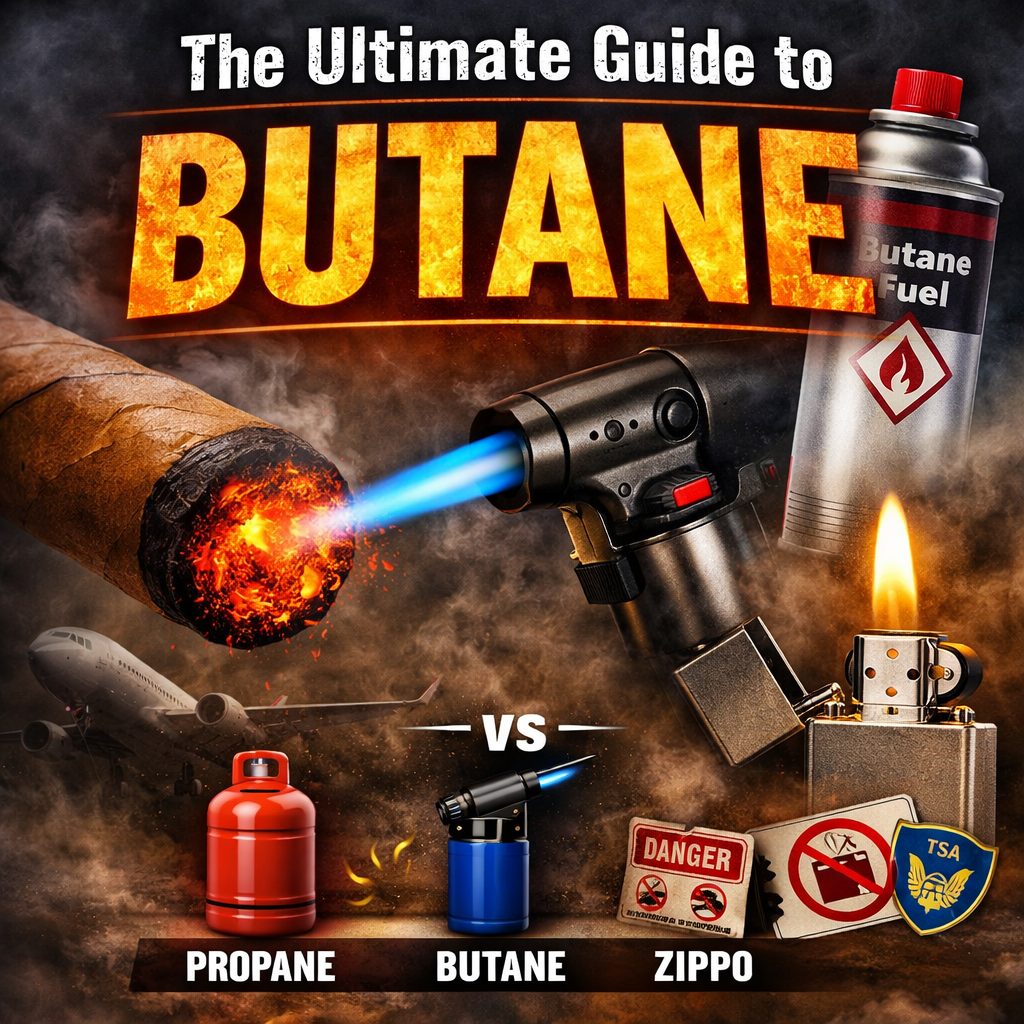
If you smoke cigars long enough, there are a few things you learn pretty quickly.
Cheap lighters are unreliable.
Matches are romantic but inconvenient.
And if you want a clean, consistent light every time, you reach for a butane torch.
But have you ever stopped and asked yourself why?
Why do cigar lighters use butane instead of propane?
What actually is butane?
Why does it burn so clean?
Why does the TSA freak out when you bring it on a plane?
And why does the post office act like you’re mailing a small bomb when you try to ship it?
Today, we’re going deep into the science, history, and weird little rules surrounding one of the most important fuels in the cigar world.
This is your complete guide to butane.
What Is Butane?
At its simplest level, butane is a hydrocarbon gas.
That means it is made entirely of carbon and hydrogen atoms, the same basic building blocks found in gasoline, propane, and natural gas.
Chemically speaking, butane has the formula:
C₄H₁₀
That means:
- 4 carbon atoms
- 10 hydrogen atoms
It belongs to a family of fuels called alkanes, which are among the simplest organic compounds.
Under normal atmospheric conditions, butane exists as a colorless, odorless gas.
But the reason it works so well in lighters is that it can be compressed into a liquid at relatively low pressure.
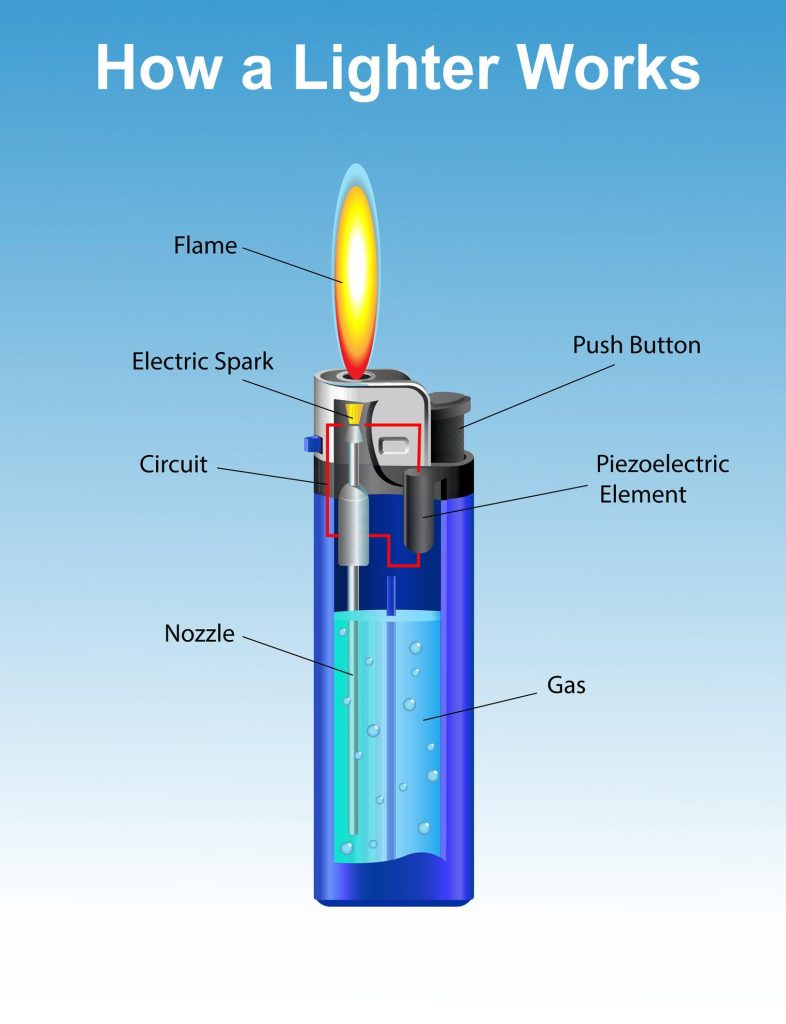
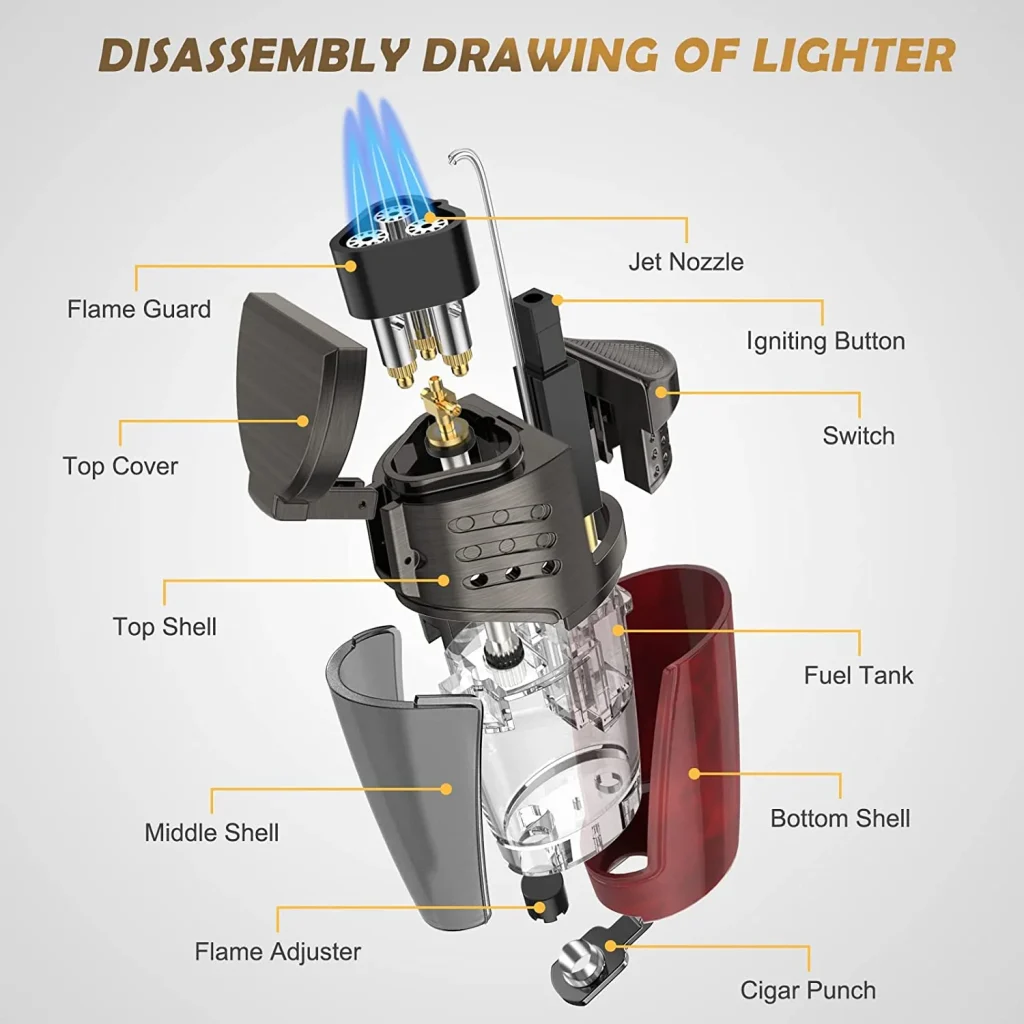
Inside your cigar lighter:
- Butane is stored as a liquid
- When you press the ignition
- The liquid instantly vaporizes into gas
- The gas mixes with oxygen
- The spark ignites it
The result is a clean, controllable flame.
Why Butane Is Perfect for Cigar Lighters
Not all fuels are created equal. When it comes to lighting cigars, butane has several advantages.
1. Clean Burning
Butane burns extremely clean compared to many other fuels.
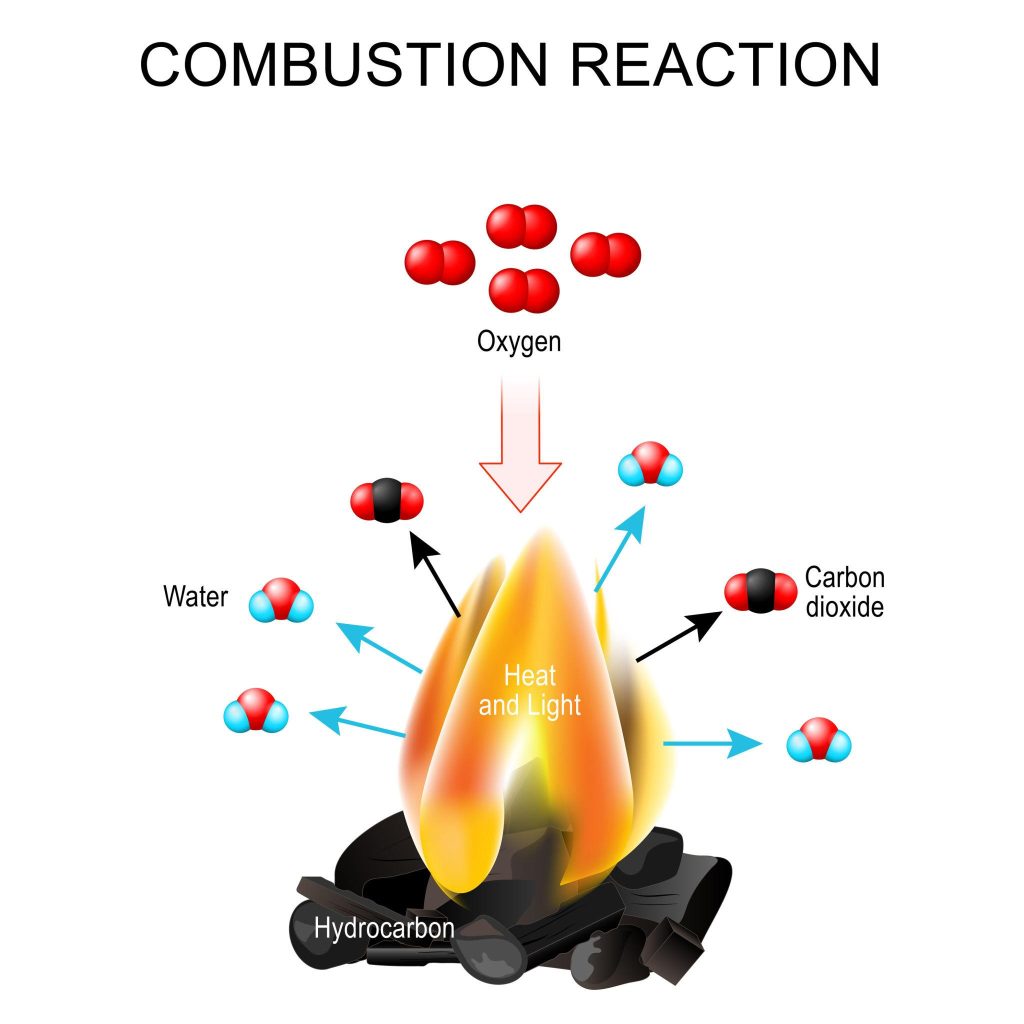
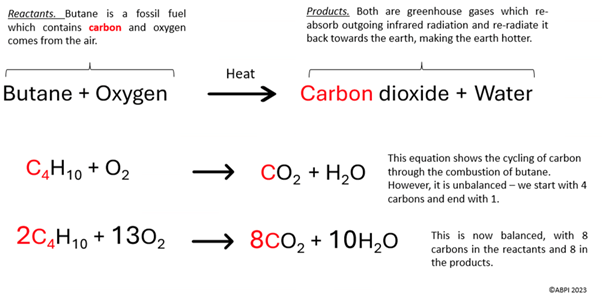
When butane combusts properly, the chemical reaction looks like this:
C₄H₁₀ + O₂ → CO₂ + H₂O
The only major byproducts are:
- Carbon dioxide
- Water vapor
There is very little soot or residue, which is critical for cigar smokers.
A dirty flame can ruin the flavor of a cigar by depositing chemicals or soot onto the foot of the cigar. Butane avoids that problem.
2. Odorless Flame
If you’ve ever lit a cigar with a Zippo lighter, you know exactly what I’m talking about.
Zippos use naphtha fuel, which smells like lighter fluid because, well, that’s exactly what it is.
That smell transfers to the cigar.
Butane burns with virtually no odor, which means:
- No chemical taste
- No contamination of the cigar
- A purer smoking experience
3. Consistent Temperature
Butane torch lighters burn extremely hot.
A typical butane torch flame reaches roughly:
2,600°F (1,430°C)
That high temperature allows you to toast and light a cigar quickly and evenly.
4. Easy Storage as a Liquid
One of the biggest advantages of butane is how easily it liquefies.
At room temperature, butane becomes liquid at only about 30 PSI.
That means it can be stored safely in small metal containers like:
- Cigar lighters
- Refill cans
- Camping fuel cartridges
This makes it incredibly portable.
Where Butane Comes From
Butane does not exist floating around in the atmosphere waiting to be collected.
It is produced during oil and natural gas processing.
There are two main sources.
Natural Gas Processing
When natural gas is pulled from the ground, it contains a mix of gases, including:
- Methane
- Ethane
- Propane
- Butane
Refineries separate these gases through a process called fractional distillation.
Each gas condenses at a different temperature, allowing them to be separated and collected.
Crude Oil Refining
Butane is also produced when crude oil is refined into products like:
- Gasoline
- Diesel
- Jet fuel
During refining, hydrocarbons are broken down and separated into usable fuels.
Butane ends up as a valuable byproduct.
The Two Types of Butane
Most people don’t realize this, but there are actually two forms of butane.
n-Butane
This is the straight-chain version of the molecule.
It is the most common type used in fuels.
Isobutane
This version has a slightly different molecular structure.
Isobutane is often used in:
- Refrigerants
- Aerosol propellants
- Some lighter fuels
The two behave very similarly but have slightly different pressure and boiling characteristics.
The History of Butane
Butane was first identified in 1849 by chemist Edward Frankland.
However, it did not become widely used until the early 1900s when petroleum refining improved.
In the early days of oil refining, gases like propane and butane were often wasted or burned off because there was no easy way to store or transport them.
Once engineers figured out how to safely compress and liquefy these gases, their usefulness exploded.
Butane quickly became popular for:
- Portable stoves
- Cigarette lighters
- Camping equipment
- Aerosol sprays
By the mid 20th century, butane had become one of the most widely used portable fuels in the world.
Why Cigar Smokers Prefer Refined Butane
You will often see lighter refill cans advertising:
- Triple refined
- Five times refined
- Ultra refined
This is not just marketing fluff.
Raw butane can contain impurities like:
- Sulfur compounds
- Heavy hydrocarbons
- Trace oils
These impurities can cause:
- Clogged lighter jets
- Inconsistent flames
- Bad taste
High-end butane brands remove these impurities through additional filtering.
This results in:
- Cleaner flames
- Better lighter performance
- Less maintenance
Why Butane Is Restricted on Airplanes
The TSA has strict rules about butane for one main reason.
Pressure and flammability.
Butane is:
- Highly flammable
- Stored under pressure
In the cargo hold or cabin of an aircraft, temperature and pressure changes could potentially cause containers to leak or rupture.
For this reason:
- Butane refill cans are not allowed in carry-on bags
- They are also prohibited in checked luggage
However, there is an interesting exception.
Passengers are allowed one butane lighter on their person.
The reasoning is that the fuel quantity is very small and contained.
Torch lighters, however, are often prohibited because they burn much hotter and are considered more hazardous.
Why the Postal Service Hates Mailing Butane
If you have ever tried shipping butane, you probably ran into a wall of rules.
That’s because butane is classified as a hazardous material.
Specifically, it falls under:
UN1011 – Flammable Gas
Shipping flammable compressed gases presents several risks:
- Explosion if containers rupture
- Fire hazards during transport
- Pressure changes in aircraft cargo holds
Because of this, shipping butane usually requires:
- Special labeling
- Hazardous material declarations
- Ground transportation only
This is why most online retailers ship butane via ground services only.
The rules are not there to annoy cigar smokers.
They exist to prevent a truck or an airplane carrying pressurized flammable gas from becoming a disaster.
Butane vs Propane
Some people wonder why cigar lighters do not use propane.
Both fuels are similar, but there are some key differences.
Propane
- Higher storage pressure
- Harder to contain in small lighters
- More common in grills and heaters
Butane
- Lower storage pressure
- Easier to liquefy
- Perfect for compact devices
In short, propane is great for barbecues and patio heaters, while butane is ideal for portable precision flames.
Why Butane Lighters Stop Working in Cold Weather
If you have ever tried lighting a cigar in freezing temperatures, you may have noticed your lighter suddenly stops working.
This is because butane has a boiling point of about 31°F.
Below that temperature, the fuel struggles to vaporize into gas.
No gas means no flame.
That is why some winter campers prefer propane, which works better in cold environments.
Is Butane Dangerous?
Like many fuels, butane is safe when used properly.
But it does have risks.
Because butane is heavier than air, leaks can accumulate in enclosed spaces.
In high concentrations, it can displace oxygen, which can be dangerous.
However, the small amounts used in cigar lighters are generally very safe when handled responsibly.
Fun Butane Facts
Here are a few interesting things most cigar smokers do not know.
• Butane is used as a propellant in aerosol cans
• It is commonly used in camping stoves
• It is sometimes blended into gasoline to improve vapor pressure
• It is used in refrigeration systems as a coolant
• Some culinary torches also run on butane
So the same fuel lighting your cigar may also be:
- powering a chef’s torch
- fueling a camping stove
- or chilling your refrigerator.
Final Thoughts
Butane is one of those everyday things that most of us never think about.
Yet for cigar smokers, it plays a huge role in the experience.
It burns clean.
It burns hot.
It stores easily as a liquid.
And it delivers the precise flame needed to toast a cigar properly.
Without butane, the modern cigar torch lighter probably would not exist.
So the next time you refill your lighter before heading outside for a smoke, take a second to appreciate the chemistry and engineering packed into that little can of fuel.
It may not get the attention of the cigar itself, but butane is quietly doing its job every single time you light up.

Best article explanation of butane I’ve ever seen.
Thanks