
Uncategorized
Kiln-Dried Spanish Cedar: The Backbone of Every Great Humidor
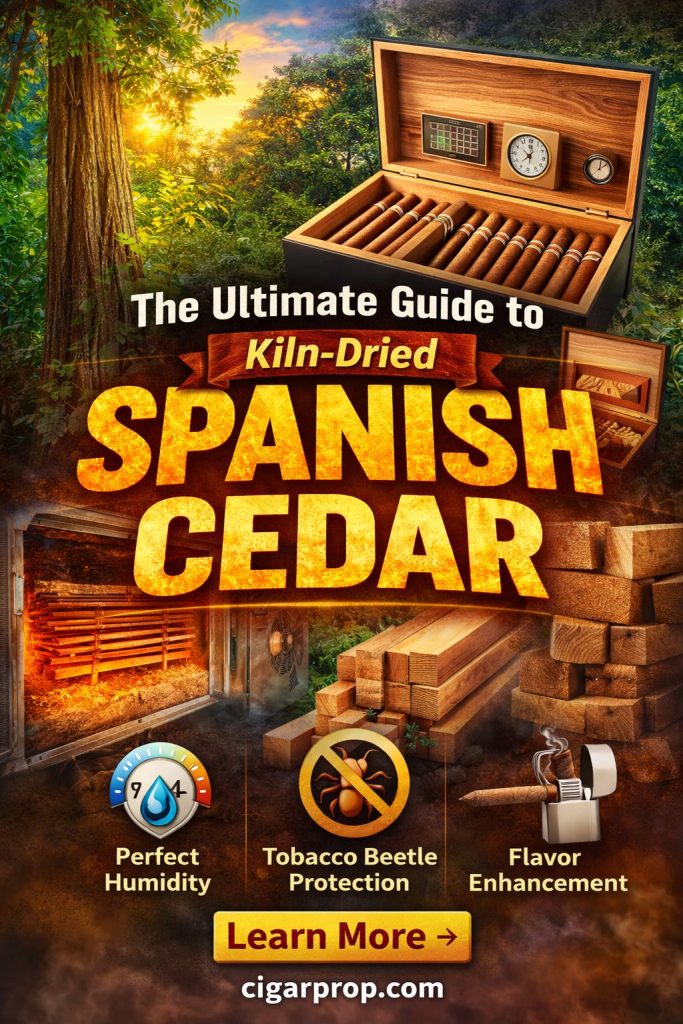
If butane is the unsung hero of your lighter, then Spanish cedar is the silent workhorse of your humidor.
You don’t see it.
You don’t think about it much.
But it plays a massive role in how your cigars age, taste, and perform.
Open any quality humidor, and you’ll find it lining the interior. Walk into a cigar shop, and the entire walk-in is built from it. Crack open a box of premium cigars, and there it is again.
But why?
Why Spanish cedar specifically?
What does “kiln-dried” actually mean?
Where does this wood come from?
And if you’re building on a budget, are there any real alternatives?
Let’s break it all down.
What Is Spanish Cedar?
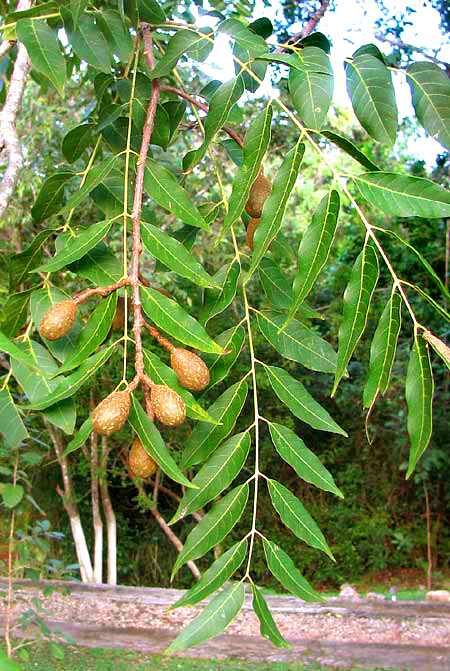
Despite the name, Spanish cedar is not actually cedar.
It’s part of the mahogany family and is scientifically known as:
Cedrela odorata
It’s native to:
- Central America
- South America
- The Caribbean
This is the same region where many premium cigars are grown and produced, which is not a coincidence.
Spanish cedar has been used in the cigar world for generations because of its unique combination of properties that no other wood quite matches.
Why Spanish Cedar Is Used in Humidors
There isn’t just one reason. It’s a combination of several critical advantages.
1. Exceptional Humidity Regulation
Spanish cedar acts like a natural humidity buffer.
It can:
- Absorb excess moisture when humidity is high
- Release moisture when humidity drops
This helps stabilize the environment inside your humidor.
Instead of wild swings in humidity, you get a more consistent range, which is exactly what cigars need to age properly.
2. Natural Resistance to Tobacco Beetles
This is a big one.
Spanish cedar contains natural oils and aromatic compounds that help repel tobacco beetles.
Those little pests can destroy an entire collection if they hatch inside your humidor.
Spanish cedar does not guarantee protection, but it creates an environment that is far less inviting for them.
3. Flavor Enhancement
If you’ve ever opened a box of cigars and smelled that unmistakable aroma, that’s Spanish cedar doing its thing.
Over time, cigars stored with Spanish cedar can pick up subtle notes of:
- Wood
- Spice
- Warm sweetness
It’s not overpowering, but it contributes to the overall aging process.
4. Mold Resistance
Spanish cedar has natural antifungal properties.
In a high-humidity environment like a humidor, that matters.
It helps reduce the risk of mold forming on:
- The wood itself
- Your cigars
5. Stability and Workability
From a builder’s standpoint, Spanish cedar is:
- Lightweight
- Easy to work with
- Dimensionally stable
It resists warping better than many other woods when exposed to humidity changes.
That’s why it’s used in:
- Humidor linings
- Trays and dividers
- Walk-in humidors
What Does “Kiln-Dried” Mean?
This is where things get really important.
Not all Spanish cedar is created equal.
Air-Dried vs Kiln-Dried
Freshly cut wood contains a significant amount of moisture.
If you use it as-is, it will:
- Warp
- Crack
- Grow mold
So the wood must be dried before it’s usable.
Air-Dried
This is the traditional method.
- Wood is stacked and left to dry naturally over time
- Can take months or even years
- Less controlled process
Kiln-Dried
This is the modern method and what you want for humidors.
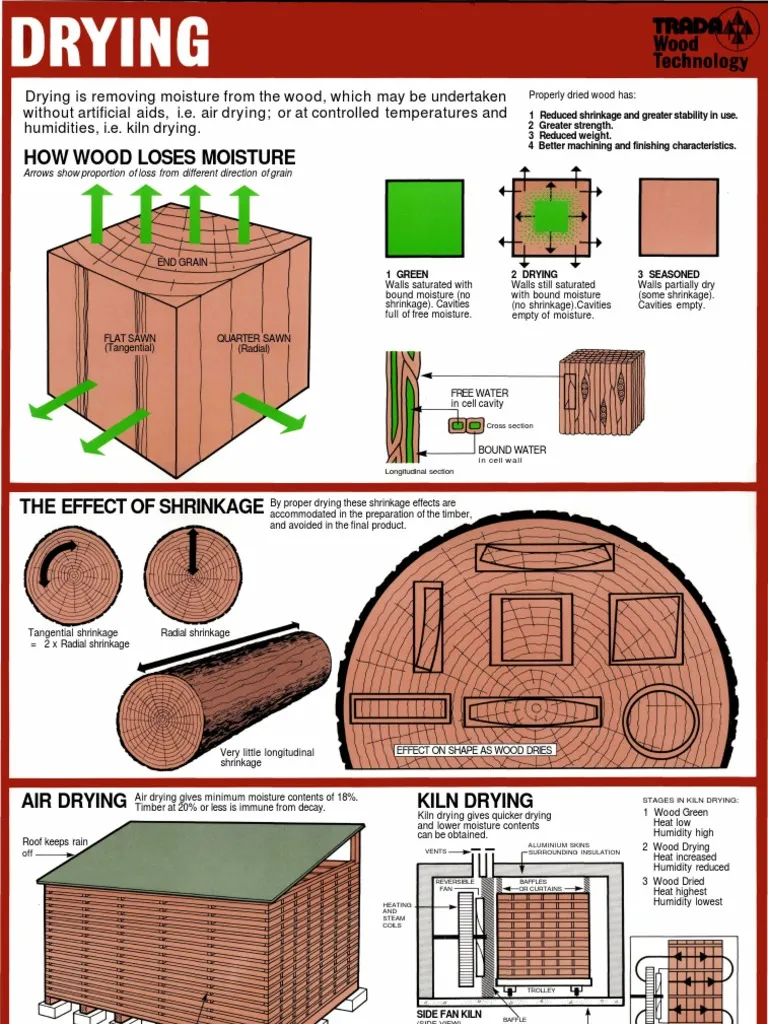
Kiln drying uses a controlled environment with:
- Heat
- Air circulation
- Humidity control
to remove moisture from the wood much faster and more consistently.
Why Kiln-Dried Matters for Humidors
Kiln-dried Spanish cedar is critical because it:
1. Prevents Warping
The wood is stabilized before it ever enters your humidor.
2. Reduces Mold Risk
Proper drying eliminates excess internal moisture that could lead to mold growth.
3. Improves Humidity Performance
Kiln-dried wood responds more predictably to humidity changes.
4. Kills Pests and Larvae
The heat used in kiln drying helps eliminate:
- Insects
- Eggs
- Larvae
That is huge when you’re storing cigars.
How Spanish Cedar Is Harvested
Spanish cedar grows relatively quickly compared to other hardwoods, but harvesting still requires care.
The Process
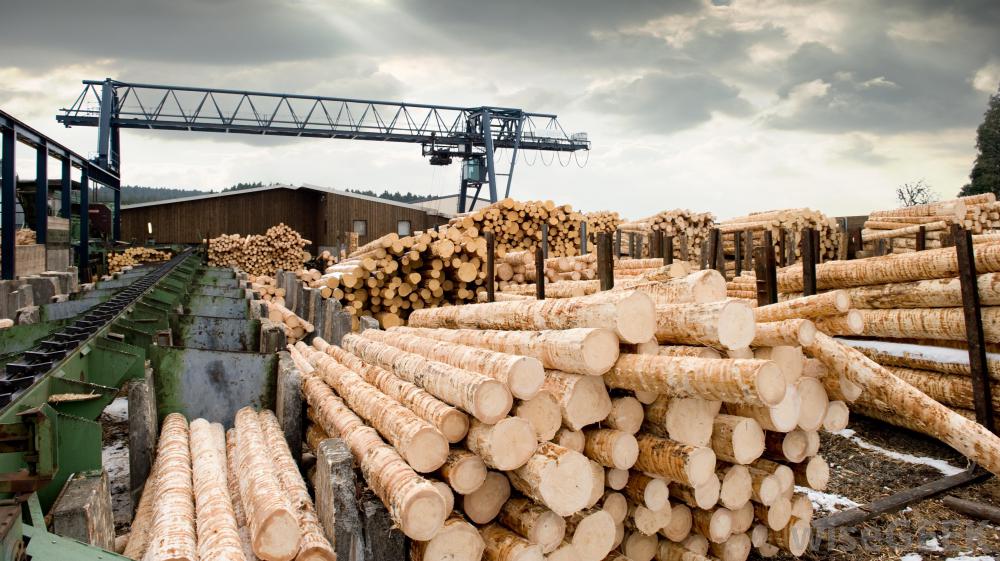
- Trees are selectively harvested, often in tropical regions
- Logs are transported to sawmills
- Logs are cut into boards or planks
- Wood is dried, ideally kiln-dried
- Boards are milled into:
- Sheets for humidor lining
- Slats for trays
- Panels for cigar boxes
Sustainability Concerns
Because Spanish cedar is in high demand, responsible sourcing matters.
Look for:
- Sustainably harvested wood
- Reputable suppliers
Some regions have experienced overharvesting, so quality material is becoming more valuable.
Why Cigar Boxes Use Spanish Cedar
Ever notice that premium cigars come in cedar boxes?
That’s not just tradition.
Those boxes:
- Help maintain humidity during shipping
- Protect cigars from pests
- Begin the aging process before you even buy them
That cedar-lined box is essentially a mini humidor.
Are There Alternatives to Spanish Cedar?
If you’re building or upgrading on a budget, this is the question.
The honest answer is yes, but with trade-offs.
1. Okoume (Gaboon)
- Lightweight hardwood
- Similar appearance
- Less aromatic
- Not as effective for humidity buffering
Verdict: Decent budget option, but not equal.
2. Mahogany
- Same general family
- Stable and workable
- Minimal aroma
Verdict: Structurally good, but lacks the benefits cigar smokers want.
3. Maple
- Very stable
- Neutral smell
- Common in cheaper humidors
Verdict: Works, but offers zero flavor or pest resistance benefits.
4. Cedar Alternatives (Aromatic Cedar)
This is where people get into trouble.
Closet cedar, also called Eastern Red Cedar, is NOT the same thing.
- Much stronger smell
- Can negatively impact cigar flavor
Verdict: Avoid for humidors.
The Budget Strategy That Actually Works
If you’re trying to save money, here’s the move.
Instead of replacing Spanish cedar completely:
- Use a humidor with a basic wood interior
- Add Spanish cedar trays, sheets, or strips
This gives you most of the benefits without the full cost.
It’s one of the smartest upgrades you can make.
Common Mistakes People Make
Using the Wrong “Cedar”
Not all cedar is equal. Spanish cedar is what you want.
Skipping Kiln-Dried Wood
This leads to warping, mold, and headaches.
Over-Humidifying
Spanish cedar helps regulate humidity, but it is not magic.
Ignoring Airflow
Even with cedar, poor airflow leads to uneven humidity.
Final Thoughts
Spanish cedar is one of those materials that quietly does everything right.
It stabilizes humidity.
It protects your cigars.
It enhances flavor over time.
And when properly kiln-dried, it does all of this reliably for years.
It’s not flashy.
It’s not something most people think about.
But without it, the modern humidor would not function the way it does.
So the next time you open your humidor and get that warm cedar aroma, just know, that wood is doing a lot more than just looking good.
